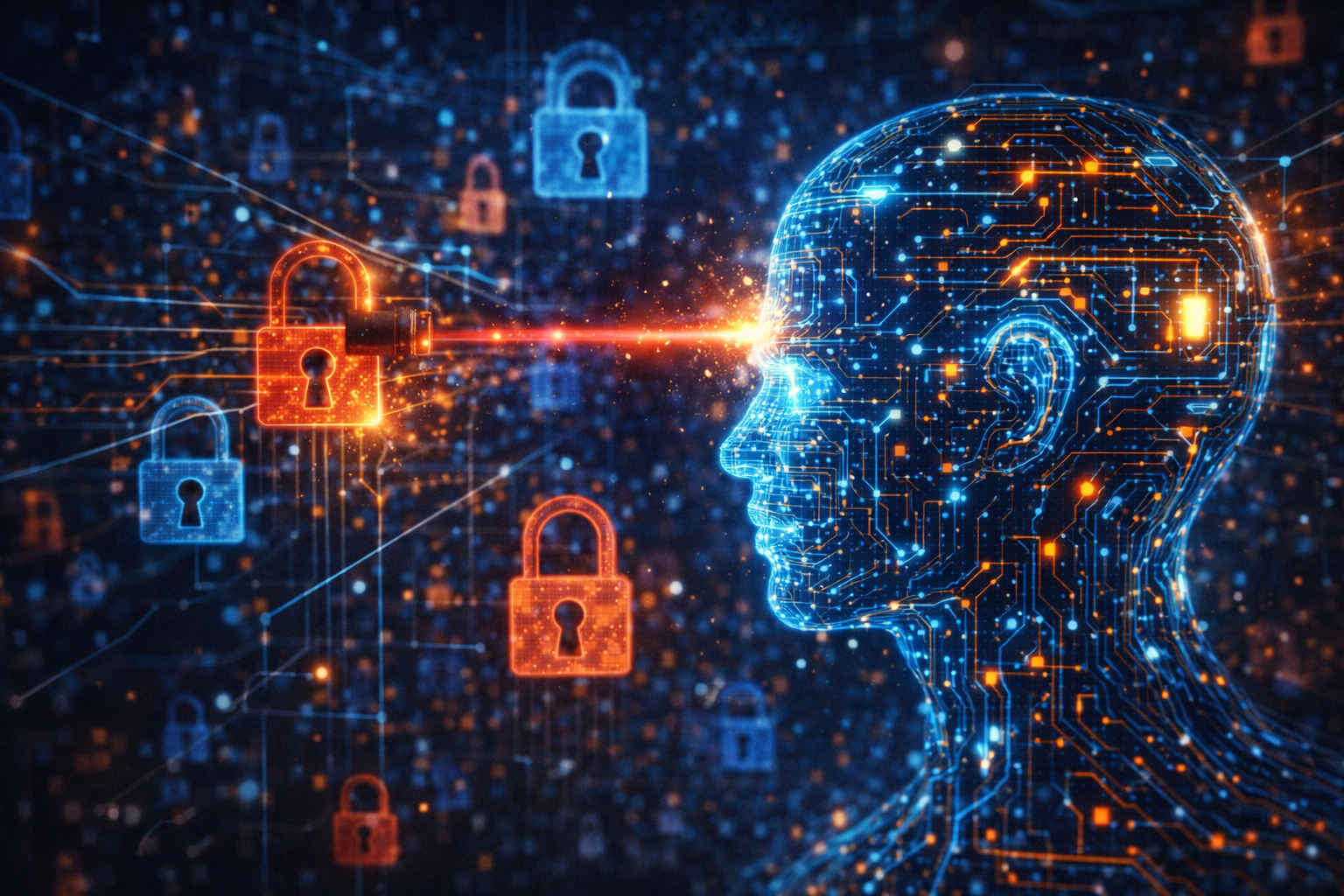
Here's a reality check that should terrify you: AI can now clone your voice from three seconds of audio. It can generate fake photos of you doing things you've never done. It can scrape your LinkedIn, analyse your writing style, and create convincing deepfakes that fool your own family. The Washington Post's recent opinion piece highlights a brutal truth we developers have known for years—your digital identity isn't just valuable anymore, it's weaponisable.
And frankly, most people are sleepwalking into digital disaster.
The Perfect Storm: How We Got Here
Let me paint you the picture of how we've arrived at this mess. For the past two decades, we've been digital hoarders, gleefully uploading every thought, photo, and personal detail to platforms that promised us connection and convenience. Facebook knows your political leanings better than your spouse. Google has a more complete record of your interests than you do. LinkedIn broadcasts your career history to anyone who cares to look.
This wasn't necessarily a problem when the worst-case scenario was targeted advertising or a data breach that leaked your email address. Annoying? Yes. Life-destroying? Rarely.
But AI has changed the game entirely.
The tools that once required Hollywood budgets and technical expertise are now available to anyone with a laptop and an internet connection. Deepfake technology that cost millions five years ago can now be accessed through free web apps. Voice cloning that required hours of audio samples now works with seconds. Image manipulation that needed Photoshop mastery is automated by AI.
We're not just dealing with data breaches anymore. We're facing identity theft on an industrial scale.
The New Threat Landscape
The Washington Post piece correctly identifies that we're facing unprecedented risks to our digital identities, but let me break down exactly what that means in practical terms, because the implications are staggering.
Voice Cloning Attacks are already happening. Scammers are calling elderly parents, using cloned voices of their children to demand emergency money transfers. The technology is so convincing that even suspicious family members are falling for it. I've seen demos where AI cloned a CEO's voice from their public conference talks and used it to authorise fake wire transfers.
Deepfake Impersonation is moving beyond entertainment into genuine harassment and fraud. Ex-partners are creating fake pornographic images. Political opponents are manufacturing compromising videos. Job candidates are facing fabricated evidence of misconduct.
Social Engineering 2.0 uses AI to analyse your public social media presence and craft perfectly targeted phishing attempts. The AI doesn't just know your name and email—it knows your writing style, your interests, your social connections, and your behavioural patterns. It can impersonate people you trust with uncanny accuracy.
But here's what really keeps me awake at night: the democratisation of these attacks. You don't need to be a target of state-sponsored hackers anymore. Any bitter ex-employee, jealous competitor, or random internet troll can potentially destroy your reputation with tools that cost less than a Netflix subscription.
Who Wins and Who Loses
The winners in this new landscape are predictable and depressing. Big Tech companies benefit because fear drives people toward their "trusted" platforms and paid verification services. security companies are making fortunes selling increasingly complex solutions to problems that shouldn't exist. Authoritarian governments love it because the chaos makes authentic information harder to distinguish from manufactured propaganda.
The losers? Pretty much everyone else, but especially:
- Content creators and influencers who depend on authentic personal brands
- Small business owners who lack resources for sophisticated digital security
- Job seekers and professionals whose careers can be sabotaged by fake evidence
- Anyone in the public eye who becomes a target for deepfake harassment
- Elderly and less tech-savvy individuals who can't distinguish real from fake
But the biggest losers are trust and truth themselves. When everything can be faked, nothing feels real. We're heading toward a world where the default assumption is scepticism, where authentic content is questioned as much as fabricated content.
My Take: We're Fighting Yesterday's War
I've been building websites and online systems since 2004, and I can tell you that most of our current security thinking is fundamentally outdated. We're still focused on preventing unauthorised access to accounts when the real threat is unauthorised impersonation of identities.
Traditional cybersecurity won't save you here. Strong passwords and two-factor authentication are useless when someone can convincingly pretend to be you without ever accessing your accounts.
The Washington Post suggests we need better digital identity protection, and they're absolutely right, but they're being too polite about it. What we actually need is a fundamental rethink of how digital identity works.
The current system is broken by design. It assumes that controlling an account equals being that person, but AI has shattered that assumption. We need cryptographic proof of identity, not just access controls. We need immutable records of authentic content, not just platform verification badges.
Here's my controversial opinion: we should never have built the internet on the assumption that digital content is trustworthy by default. We've spent decades building systems that prioritise convenience over verification, and now we're paying the price.
What You Can Actually Do About It
Enough doom and gloom. Here's practical advice that actually works:
Immediate Actions
- Audit your digital footprint ruthlessly. Google yourself regularly and set up alerts for your name. Remove old accounts and outdated information.
- Limit public audio and video content unless absolutely necessary. Every TikTok video or podcast appearance is potential training data for voice cloning.
- Use watermarking for important content. Adobe and other companies are developing blockchain-based content authentication systems.
- Create a "proof of life" protocol with family and colleagues—agreed-upon phrases or questions that only you would know.
Medium-Term Strategies
- Diversify your digital presence. Don't put all your identity eggs in one platform basket.
- Build direct communication channels with important contacts that bypass social media and email.
- Document your authentic content with timestamps and metadata that can prove creation dates.
- Invest in reputation monitoring services if your career depends on your public image.
Long-Term Thinking
Support development of decentralised identity systems that give individuals control over their digital identity verification. Push for legislation that makes deepfake creation without consent a serious crime. Demand that platforms implement robust content authentication systems.
But most importantly, change how you think about digital content. Start treating online information with the same scepticism you'd apply to a random phone call claiming to be from your bank.
The Hard Truth About What's Coming
I'll leave you with this uncomfortable reality: this is just the beginning. The AI tools available today are primitive compared to what's coming in the next five years. If voice cloning from three seconds of audio seems scary, wait until you see what real-time voice conversion can do during live phone calls.
The Washington Post is right that we need better protection for our digital identities, but they're understating the urgency. This isn't a future problem we can solve with better policies and gradual improvements. This is a present crisis that demands immediate action from individuals, companies, and governments.
Your digital identity isn't just an asset anymore—it's a liability that can be weaponised against you. The question isn't whether you'll be targeted, it's whether you'll be prepared when it happens. Start protecting yourself now, because waiting until you're a victim is too late.