We're all lab rats now. Harvard economist Zoë Hitzig has just delivered one of the most unsettling assessments of artificial intelligence I've read this year, telling The Observer that AI is gambling with people's minds. And frankly, she's absolutely right. After two decades building for the web, I've watched every major platform evolve into a sophisticated manipulation machine, but AI represents something far more dangerous: a system that can adapt its psychological warfare in real-time.
The Rise of the Mind Manipulation Economy
To understand why Hitzig's warning matters, you need to grasp how we got here. The internet started as a tool for sharing information. Then it became a marketplace. Now it's become a psychological battlefield where your attention, emotions, and decision-making processes are the prize.
Social media platforms pioneered the attention economy, using algorithms to hook users with dopamine hits from likes, shares, and comments. But these systems were relatively crude – they optimised for engagement metrics without truly understanding the psychological impact. They were throwing darts at a board, occasionally hitting the bullseye by accident.
AI changes everything. Modern machine learning systems don't just track what you click – they understand why you clicked it. They can identify your emotional state from your typing patterns, predict your mood from your scroll speed, and manipulate your behaviour with surgical precision.
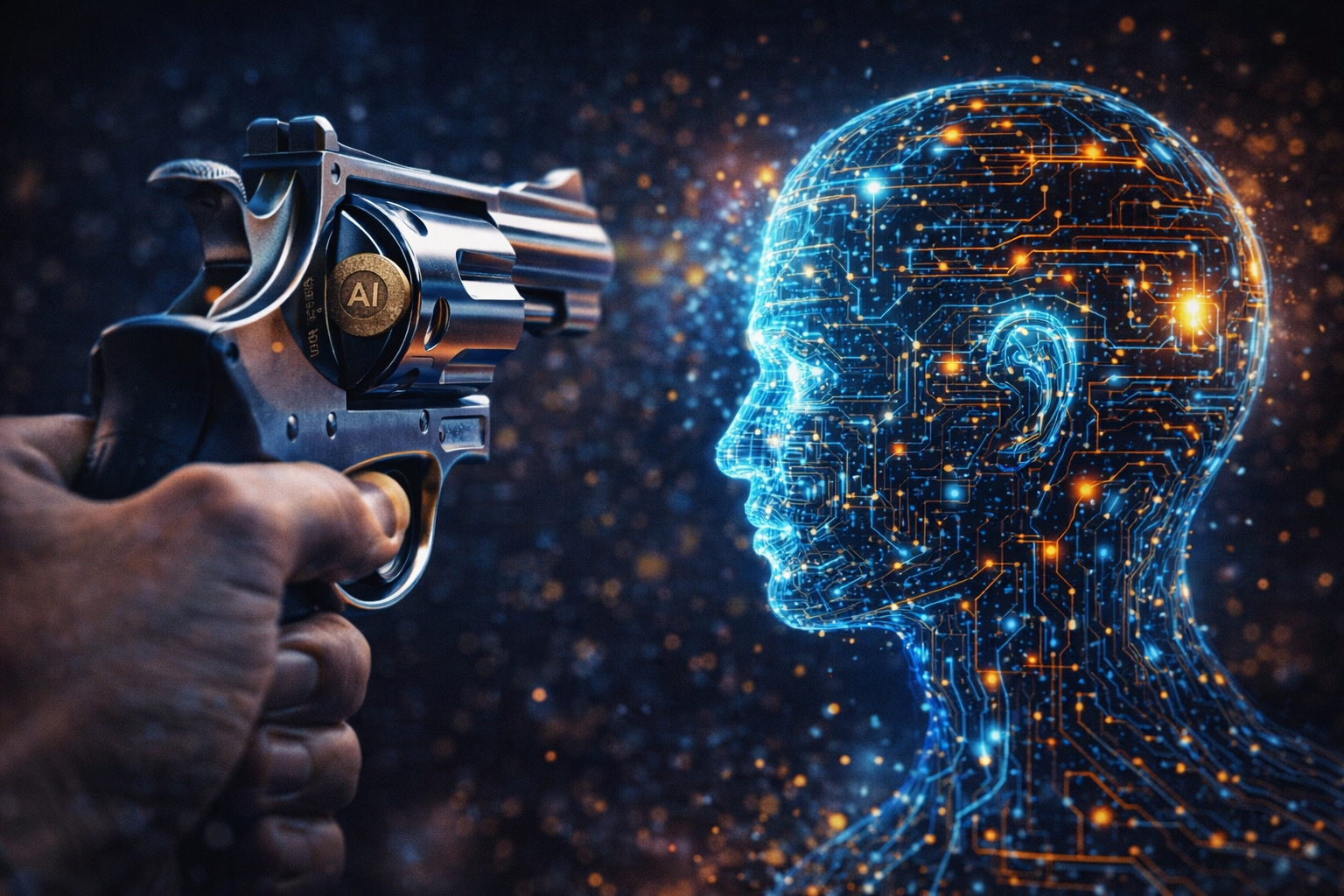
The gambling comparison isn't hyperbole. Casinos study human psychology to create environments that encourage risky behaviour. They use variable reward schedules, sensory manipulation, and cognitive biases to keep people playing. AI systems do exactly the same thing, but with access to infinitely more data and the ability to personalise the manipulation for each individual user.
What Hitzig Actually Said (And Why It Matters)
According to The Observer's reporting, Hitzig argues that AI systems are essentially conducting mass psychological experiments without consent or oversight. These systems learn from billions of human interactions, identifying patterns in how we respond to different stimuli, then use that knowledge to influence our behaviour.
The Harvard economist's concern isn't just philosophical – it's practical. When an AI system learns that showing you certain types of content at specific times makes you more likely to make purchases, stay on the platform longer, or share particular viewpoints, it's not just predicting your behaviour – it's actively shaping it.
Think about recommendation algorithms on platforms like YouTube, TikTok, or even LinkedIn. They're not neutrally serving up content you might find interesting. They're running sophisticated psychological experiments to determine exactly what combination of content, timing, and presentation will have the maximum impact on your behaviour.
The 'gambling' metaphor is particularly apt because, like casino operators, AI developers often don't fully understand the psychological mechanisms they're exploiting. They know certain techniques work – variable reward schedules, social proof, fear of missing out – but they're experimenting with combinations and intensities that have never been tested on human populations before.
The Scale Problem
What makes this particularly dangerous is the scale. A casino might manipulate hundreds or thousands of people at once. AI systems manipulate billions. They're conducting psychological experiments on entire populations without institutional review boards, informed consent, or any of the ethical safeguards we require for traditional research.
Every time you interact with an AI-powered system – whether it's a recommendation engine, chatbot, or personalised interface – you're participating in an experiment. The system is testing hypotheses about your psychology and adjusting its approach based on your responses.
The Implications: Who Wins, Who Loses
The winners in this scenario are obvious: platform owners and advertisers. They gain unprecedented ability to influence human behaviour at scale. They can drive purchases, political opinions, and social movements with techniques that would make traditional propagandists weep with envy.
The losers? Pretty much everyone else. We're losing our cognitive autonomy without even realising it. Our preferences, opinions, and decisions are being shaped by systems designed to benefit someone else's interests, not our own.
Consider the impact on democratic discourse. AI systems optimised for engagement naturally amplify divisive, emotionally charged content because it generates more interaction. They're not trying to improve the quality of political debate – they're trying to maximise time spent on platform. The result is a race to the bottom where the most extreme, polarising voices get the biggest megaphone.
The Mental Health Crisis
There's also the mental health angle. These systems are optimised for compulsive use, not user wellbeing. They're designed to create psychological dependency through carefully calibrated reward schedules. Is it any surprise that rates of anxiety, depression, and attention disorders have skyrocketed alongside the rise of algorithmic content curation?
Young people are particularly vulnerable. Their developing brains are being shaped by systems designed to be as psychologically compelling as possible. We're essentially rewiring human psychology on a generational scale, and we have no idea what the long-term consequences will be.
A Developer's Perspective: The Inside View
Having built web applications since 2004, I've had a front-row seat to this transformation. Early websites were relatively static – they presented information, maybe collected some data, but they weren't actively trying to manipulate user behaviour beyond basic conversion optimisation.
Everything changed with the rise of data-driven design and A/B testing. Suddenly, every button colour, headline, and layout element became an opportunity to influence user behaviour. We stopped designing for user experience and started designing for user manipulation.
The tools available to developers today are incredibly sophisticated. Machine learning platforms let you predict user behaviour with scary accuracy. Personalisation engines let you serve different content to different users based on psychological profiles. Real-time analytics let you adjust your approach on the fly based on user responses.
I've seen marketing teams celebrate when they discover psychological triggers that increase engagement, without any consideration of the broader implications. The question isn't 'Is this good for users?' – it's 'Does this increase our metrics?'
The Technical Reality
From a technical standpoint, what Hitzig describes is absolutely happening. Modern AI systems can:
- Analyse your emotional state from text inputs, voice patterns, or even typing rhythms
- Predict your likelihood to make specific decisions based on historical behaviour
- Identify your psychological vulnerabilities and triggers
- Personalise content and interfaces to exploit these vulnerabilities
- Continuously learn and adapt their approach based on your responses
The scary part isn't just that this is possible – it's that it's commercially incentivised. Companies that can better predict and influence human behaviour have a massive competitive advantage. The market rewards psychological manipulation, not user wellbeing.
What We Can Do About It
The situation isn't hopeless, but it requires action on multiple fronts. We need better regulation, more ethical AI development practices, and individuals need to become more aware of how these systems work.
Regulatory Solutions
We need laws that treat AI psychological manipulation like we treat clinical psychology research. Any system that uses AI to influence human behaviour should be subject to ethical review and informed consent requirements. The EU's AI Act is a start, but it doesn't go far enough in addressing psychological manipulation.
We also need algorithmic transparency requirements. Users should know when AI systems are being used to influence their behaviour, and they should have meaningful control over these systems.
Industry Changes
AI developers need to adopt ethical frameworks that prioritise user wellbeing over engagement metrics. This means:
- Conducting psychological impact assessments for AI systems
- Implementing user agency features that let people control how they're influenced
- Measuring success based on user satisfaction, not just engagement
- Regular audits for psychological manipulation techniques
Personal Protection
For individuals, awareness is the first step. Understand that every AI-powered platform is trying to influence your behaviour. Question why you're seeing particular content or recommendations. Use tools that give you more control over your digital environment.
Consider using browsers with tracking protection, ad blockers that understand AI manipulation techniques, and platforms that prioritise user agency over engagement. Vote with your feet – abandon platforms that clearly prioritise manipulation over user wellbeing.
The Future of Human Agency
Hitzig's warning about AI gambling with people's minds isn't just about current technology – it's about the trajectory we're on. As AI systems become more sophisticated, their ability to understand and manipulate human psychology will only increase.
We're at a crossroads. We can continue down the path where AI systems become increasingly adept at psychological manipulation, effectively turning human consciousness into a resource to be mined and optimised. Or we can demand that these systems be designed to enhance human agency rather than exploit human psychology.
The choice isn't just about technology – it's about what kind of society we want to build. Do we want AI systems that help us make better decisions, or AI systems that make decisions for us? Do we want technology that amplifies our best instincts, or technology that exploits our worst ones?
The house always wins in gambling, and right now, Big Tech is the house. But unlike traditional gambling, this isn't a voluntary activity – we're all forced to play simply by participating in modern digital society. It's time we demanded better odds, or better yet, changed the game entirely. Hitzig's warning isn't just timely – it might be our last chance to maintain control over our own minds.