Here's a truth that'll make comfortable middle-class parents squirm: the kids they write off as 'troublemakers' and 'lost causes' might just be the ones who'll build Britain's digital future. While mainstream education continues to churn out conformists who tick boxes, Wolverhampton's School of Coding and AI is proving that excluded students aren't broken — they're just wired differently. And that difference is exactly what the tech industry desperately needs.
The Broken System That Creates 'Problem' Kids
Let's be brutally honest about what school exclusion really means in 2024. We're not talking about genuinely dangerous kids who pose a physical threat. We're talking about students who don't fit the Victorian-era education model that still dominates British schools. Kids who question authority, think differently, or simply can't sit still for six hours memorising facts they can Google in seconds.
According to government statistics, permanent exclusions have risen by 44% since 2017. These aren't random troublemakers — they're often the most creative, entrepreneurial, and independent-thinking students. The very traits that make them 'difficult' in a classroom setting are exactly what make brilliant developers, innovators, and AI specialists.
Traditional education treats these students like defective products on a factory line. Can't concentrate for arbitrary periods? You're ADHD. Challenge the teacher's authority? You're disruptive. Think there's a better way to solve a problem? You're not following instructions. The system labels them failures and pushes them out, usually into a cycle of disengagement that can last decades.
What Wolverhampton Got Right
The School of Coding and AI in Wolverhampton represents something genuinely revolutionary in British education. Rather than trying to force square pegs into round holes, they've built an environment that works with how these students actually think and learn.
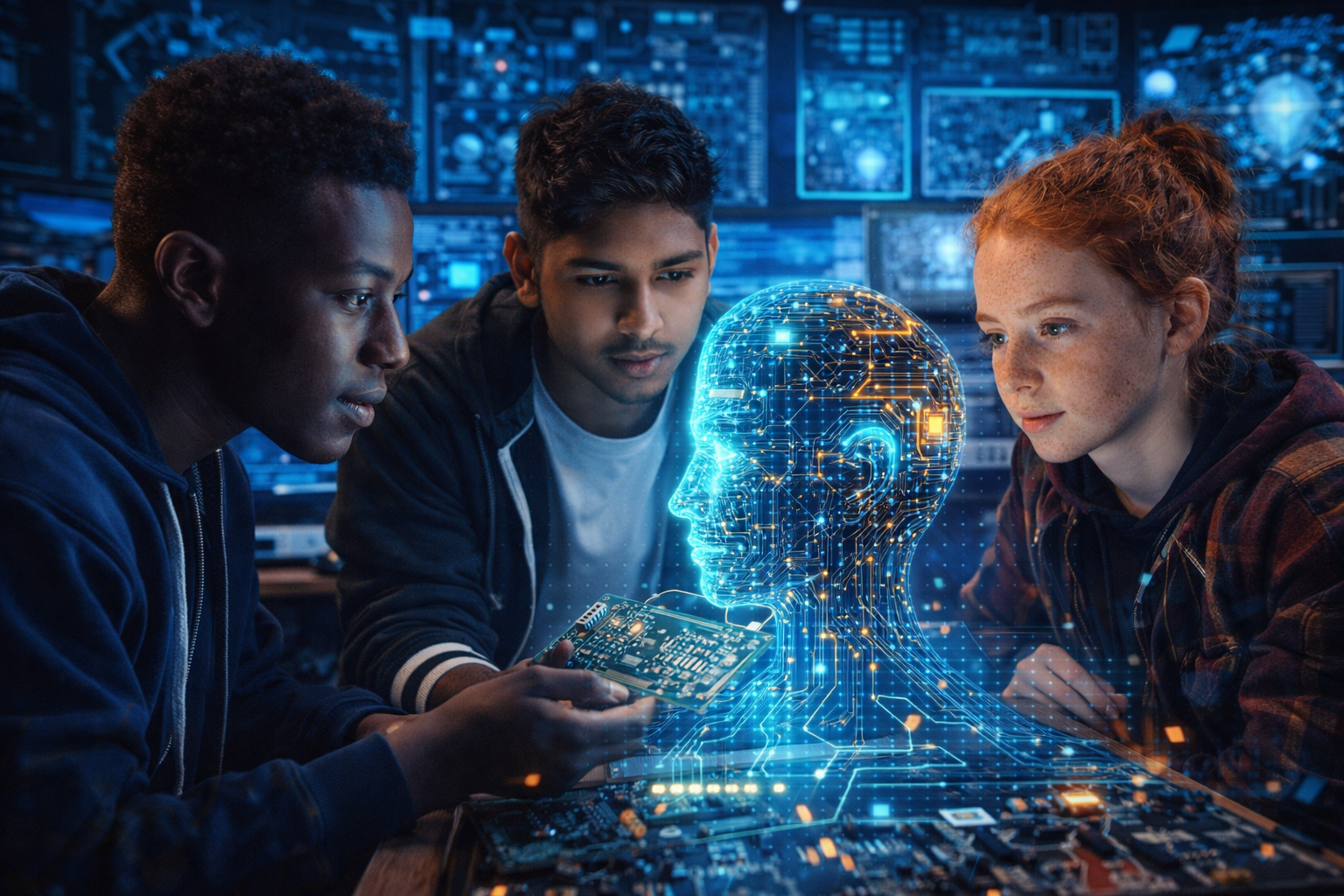
This isn't your typical 'alternative provision' that's basically a holding pen for excluded kids. According to the BBC report, students are learning genuine, industry-standard skills in coding, AI development, and digital creation. They're working on real projects, building actual applications, and developing the kind of practical expertise that tech companies are crying out for.
The approach is fundamentally different from mainstream education. Instead of sitting passively while teachers drone on about abstract concepts, students are learning by doing. They're solving real problems, creating tangible products, and seeing immediate results from their efforts. This is how human beings naturally learn — through experimentation, iteration, and practical application.
What's particularly brilliant is the focus on AI and emerging technologies. While traditional schools are still teaching students to write essays by hand 'in case the computers break', Wolverhampton is preparing excluded students for the jobs of tomorrow. They're learning machine learning, natural language processing, and automation — skills that will be worth their weight in gold within five years.
Why This Changes Everything
This model completely flips the narrative around excluded students. Instead of seeing them as problems to be managed, it recognises them as untapped potential waiting to be unleashed. The implications of this shift are massive.
First, it exposes the fundamental dysfunction of mainstream education. If 'problem' students can thrive when given the right environment and approach, what does that say about the thousands of schools that couldn't reach them? It suggests that the failure isn't with the students — it's with an education system that's completely out of touch with how learning actually works.
Second, it addresses one of the biggest challenges facing the UK tech sector: the skills shortage. We've got companies desperate for developers, data scientists, and AI specialists, while simultaneously excluding students who could excel in these fields. It's economic madness disguised as educational policy.
The students coming out of programmes like this aren't just technically competent — they're problem-solvers by nature. They've had to overcome systemic rejection, find alternative paths, and prove themselves against the odds. These are exactly the kind of people you want building your next product or solving complex technical challenges.
The Competitive Advantage
There's another angle here that most people miss. Students from non-traditional backgrounds bring perspectives that sheltered, middle-class graduates simply don't have. They understand real-world problems because they've lived them. They're not building apps for people who already have everything — they're creating solutions for people who've been overlooked.
This diversity of thought and experience is crucial for developing AI systems that work for everyone, not just the privileged few. When your development team has only ever attended Russell Group universities, you end up with products that reflect that narrow worldview. The Wolverhampton approach could help fix that.
My Take: This Is What Education Should Look Like
I've been working in web development since 2004, and I can tell you that some of the best developers I know barely made it through traditional education. They were the kids who got detention for 'hacking' the school computers or were told they'd never amount to anything because they couldn't sit still during double maths.
The skills that matter in modern tech — creativity, persistence, independent thinking, and the ability to learn continuously — are often actively discouraged by traditional schooling. Schools want compliance, not innovation. They want students who follow instructions, not ones who question whether there's a better way.
What Wolverhampton is doing should be the norm, not the exception. Every excluded student should have access to this kind of opportunity. But more than that, mainstream education should be learning from this approach rather than dismissing it as just another alternative provision.
The AI revolution isn't going to be led by graduates who spent three years writing essays about Shakespeare. It's going to be driven by people who understand technology, think creatively about problems, and aren't afraid to challenge conventional wisdom. In many cases, that's exactly the kind of student that mainstream education has failed.
The Uncomfortable Truth
Here's what nobody wants to admit: many excluded students are excluded precisely because they're too intelligent and independent for the system. They see through the arbitrary rules, question the pointless busywork, and refuse to pretend that jumping through hoops has any relationship to real learning.
The education establishment calls this 'disruptive behaviour'. The tech industry calls it 'entrepreneurial thinking'. The difference in perspective is everything.
What Needs to Happen Next
If you're reading this and nodding along, here's what you can actually do about it:
- Support alternative education models — donate to organisations doing this work, or lobby your MP to fund more programmes like Wolverhampton's
- Hire differently — if you're in a position to recruit, look beyond traditional qualifications. Give portfolio-based candidates a chance
- Mentor excluded students — share your skills and experience with young people who've been written off by the system
- Challenge the narrative — stop accepting that excluded students are 'failures'. They're often just square pegs being forced into round holes
- Push for systemic change — support politicians and policies that prioritise practical, skills-based education over Victorian-era conformity
For developers specifically, this is an opportunity to give back. Many of us succeeded despite our education, not because of it. We learned to code by breaking things, building projects, and solving real problems. That's exactly the approach that works for excluded students.
The Business Case
Even if you don't care about social justice, there's a compelling business argument here. The UK faces a critical shortage of tech talent. We're importing developers from around the world while simultaneously excluding students who could be trained domestically.
Companies that recognise this opportunity early will have access to a pipeline of motivated, creative, and resilient talent that their competitors are ignoring. These students have already proven they can overcome obstacles and think independently. That's exactly what you want in a team member.
The Future Starts With the Excluded
Wolverhampton's School of Coding and AI isn't just helping individual students — it's providing a blueprint for fixing one of the most broken aspects of British society. We've created an education system that identifies our most creative and independent thinkers, labels them as problems, and pushes them out. Then we wonder why we have a skills shortage and lack innovation.
The students thriving in Wolverhampton aren't succeeding despite being excluded — they're succeeding because someone finally recognised their potential and gave them the right environment to flourish. This should be a wake-up call for anyone who cares about Britain's digital future. The revolution won't come from the comfortable middle classes who never questioned the system. It'll come from the kids who were brave enough to reject it and smart enough to find a better way.