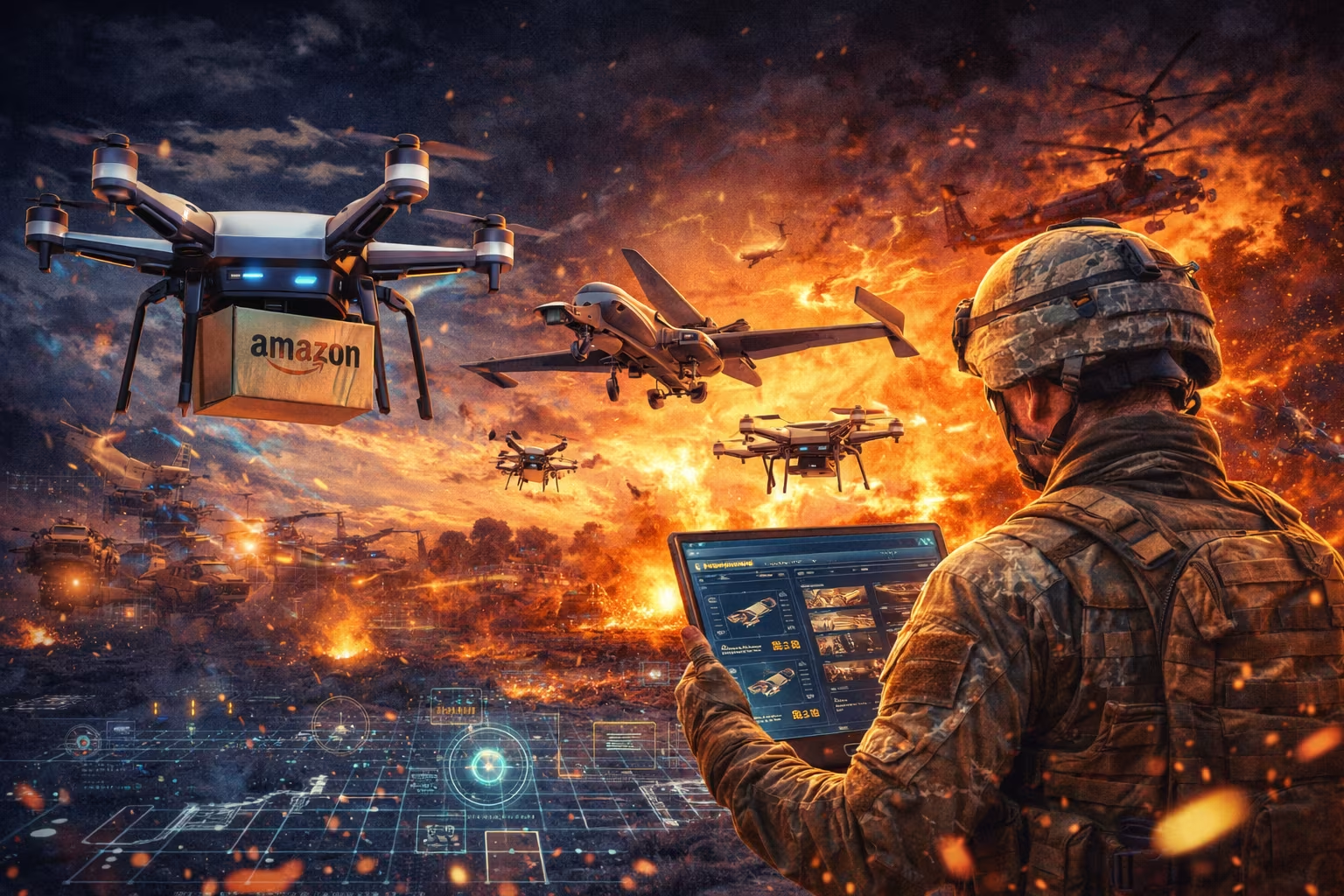
The future of warfare just got its own online shopping cart. While you've been clicking 'Add to Basket' for your weekly groceries, the US Army has been quietly building something far more significant with Amazon: a digital marketplace for military drones. This isn't just another e-commerce story—it's the commoditisation of autonomous killing machines, packaged with the same user experience that brought you one-click purchasing.
The Military's Digital Transformation Problem
Let's be brutally honest about where this comes from. The military procurement system is an absolute disaster. I've worked with government contracts before, and the bureaucracy makes molasses look speedy. Traditional defence purchasing involves mountains of paperwork, months of approvals, and costs that would make your eyes water.
Meanwhile, modern warfare has become increasingly dependent on unmanned aerial systems (UAS)—what most of us call drones. From reconnaissance missions to direct combat operations, these machines are reshaping battlefields faster than military procurement can adapt. The Army recognised they needed to move from a 20th-century purchasing model to something that matches the pace of 21st-century conflict.
Enter Amazon, a company that's mastered the art of getting complex products from warehouse to customer efficiently. According to Fortune's reporting, this partnership represents a fundamental shift in how military technology is bought and sold. It's not just about speed—it's about treating warfare like any other market vertical.
What This Drone Marketplace Actually Is
This isn't Amazon slapping a military section onto their main site. The Army and Amazon Web Services are creating a dedicated online storefront specifically for military drone procurement. Think of it as a B2B marketplace, but instead of office supplies, you're browsing autonomous aircraft capable of surveillance and targeted elimination.
The platform will allow military units to browse, compare, and purchase drone systems with the same ease you'd buy a new laptop. Product listings will include technical specifications, operational capabilities, and presumably customer reviews—though I suspect those reviews might be classified.
From a technical perspective, this makes perfect sense. Amazon's infrastructure can handle the complex logistics of military supply chains while providing the user experience that modern procurement officers expect. Cloud-based catalogues, real-time inventory management, and streamlined approval workflows are exactly what the military needs to modernise its purchasing processes.
But here's where it gets interesting from a technology standpoint: this platform will likely include AI-powered recommendation engines. Just as Amazon suggests products based on your browsing history, this system could recommend drone configurations based on mission parameters. 'Customers who bought this surveillance drone also purchased these reconnaissance packages.'
The Implications Are Staggering
Let's talk about what this really changes. First, the democratisation of military technology. When advanced drone systems become as easy to procure as office equipment, smaller military units gain access to capabilities that were previously restricted to major operations. This could fundamentally alter tactical planning and execution.
Second, the data implications are massive. Amazon will have unprecedented insight into military procurement patterns, operational priorities, and strategic planning. Even with strict data governance, the mere existence of this information in a commercial cloud environment raises questions about security and sovereignty.
Third, this accelerates the militarisation of commercial technology. Amazon isn't just providing logistics—they're becoming integral to military operations. The line between civilian tech companies and military contractors is blurring beyond recognition.
From an industry perspective, this legitimises the military-industrial-digital complex. Other tech giants will inevitably follow suit, creating specialized military marketplaces for everything from cybersecurity tools to AI-powered weapons systems. We're witnessing the birth of a new sector: military e-commerce.
A Developer's Take: This Is Inevitable But Troubling
I've been building web applications since 2004, and I've seen how technology reshapes industries. This drone marketplace is technically brilliant and strategically inevitable—but it makes me deeply uncomfortable.
From a pure technology perspective, this is exactly what military procurement needed. The current system is so inefficient it's almost criminal. Digital marketplaces excel at matching complex requirements with available solutions, and Amazon's infrastructure can handle the scale and security requirements military operations demand.
But here's what bothers me: we're applying consumer psychology to warfare. The same behavioural nudges that make you buy more books are now being used to sell autonomous weapons. The gamification elements that make online shopping addictive—reviews, recommendations, comparison features—are being applied to instruments of war.
As someone who's built e-commerce systems, I know how these platforms influence behaviour. They don't just facilitate purchases—they encourage them. They make complex decisions feel simple and urgent. When applied to military procurement, this could lead to over-purchasing, impulse buying of unnecessary capabilities, or worse: normalising the acquisition of increasingly lethal technology.
The technical architecture also concerns me. Centralising military procurement data creates an incredibly valuable target for foreign intelligence services. Even with military-grade security, putting this much strategic information in one system represents a massive single point of failure.
What This Means For Everyone Else
If you're in the tech industry, pay attention to this development. Military contracts represent enormous revenue opportunities, but they also come with ethical responsibilities that many developers aren't prepared for. The code you write for 'logistics optimisation' might be used to coordinate drone strikes.
For businesses, this signals that government procurement is going digital across all sectors. If the military—traditionally the most conservative buyer—is embracing marketplace models, every government department will follow. Start preparing your companies for digital-first government sales processes.
For citizens, this represents a fundamental change in how your tax money is spent on defence. Greater transparency in procurement could lead to better accountability, but it also risks making warfare feel routine and commercial rather than the grave decision it should be.
Most importantly, this development highlights the need for ethical frameworks in military technology. We need robust discussions about the role of commercial platforms in warfare, the responsibilities of tech companies in military operations, and the long-term implications of making weapons procurement as easy as online shopping.
The Uncomfortable Truth
This drone marketplace represents everything that's both brilliant and terrifying about modern technology. It will undoubtedly improve efficiency, reduce costs, and potentially save lives by getting the right equipment to the right people faster. But it also represents the complete commercialisation of warfare, turning life-and-death decisions into consumer experiences.
We're not just watching the military modernise—we're witnessing the transformation of war itself into a digital marketplace where autonomous killing machines are just another product category. The question isn't whether this is technically feasible (it obviously is), but whether we're comfortable with the world this technology is creating. Because once this genie is out of the bottle, there's no putting it back.