AI Is Replacing Search Engines: What’s Really Happening to Google Traffic
For the last 20 years, the internet ran on one simple system.
You searched something on Google, clicked a few links, compared information, and eventually found your answer.
That behaviour shaped everything — websites, businesses, marketing, even how content is written.
But that system is starting to break.
And not gradually — quickly.
AI isn't just improving search. It's changing how people behave online. And once behaviour changes, everything built on top of it starts to shift too.
The Shift Has Already Started
This isn't some future prediction. It's already happening right now.
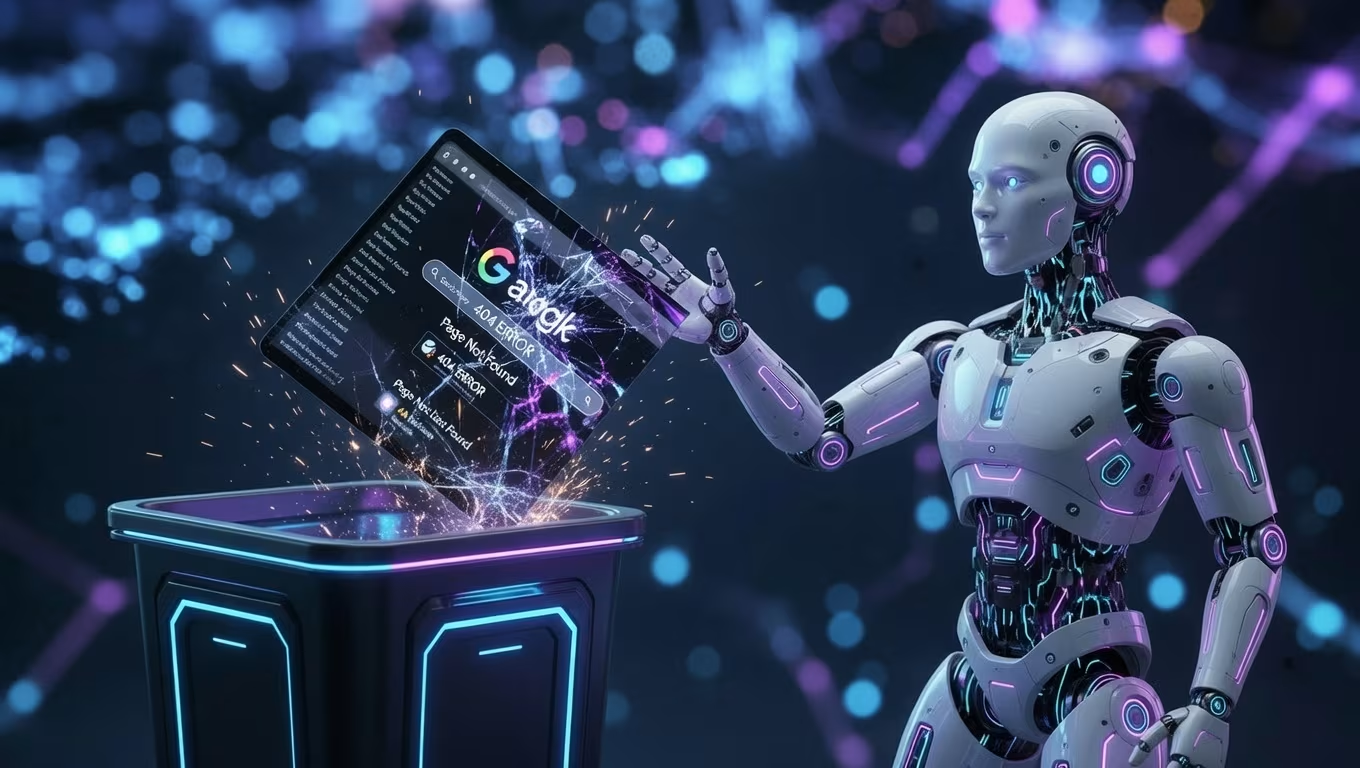
Google has begun turning itself into an AI answer engine. Instead of showing a list of links, it increasingly shows full answers at the top of the page.
These AI summaries are designed to give users exactly what they need without clicking anywhere.
And the impact is huge: AI Overviews can reduce clicks to the top result by around 58%, with some studies showing up to a 79% drop in click-through rates.
Even ranking #1 doesn't guarantee traffic anymore.
That alone completely changes the game.
The Rise of Zero-Click Search
What's really happening underneath all this is a massive behavioural shift.
We're moving into what's known as a zero-click internet.
That means users get their answers without ever leaving the search page.
- More than 80% of searches now end without a click
- AI-powered results push that number even higher (up to 83%)
- Users are far less likely to click links when AI summaries appear
Think about what that means.
The entire purpose of SEO used to be getting clicks.
Now, clicks are disappearing.
AI Is Absorbing the Traffic
This is where it starts to hit hard for website owners.
Traffic isn't just dropping randomly — it's being absorbed by AI systems.
Instead of sending users to your site, platforms are using your content to generate answers directly.
Recent reports show that smaller publishers have already lost up to 60% of their search traffic as AI tools grow.
And this isn't limited to small sites.
Across the board, click-through rates are collapsing:
- Organic CTR drops by around 61% when AI answers appear
- Only about 8% of users click results when AI summaries are shown
So even though search volume is still growing, traffic to websites is shrinking.
That's the paradox.
People Are Skipping Search Engines Entirely
At the same time, something else is happening.
People are starting to bypass search engines altogether.
Instead of typing keywords, they're asking full questions inside AI tools.
"What's the best hosting provider for a small UK business under £20/month?"
And they get a complete, structured answer instantly.
No clicking. No comparing. No effort.
Once you experience that, traditional search starts to feel slow and inefficient.
Why AI Is Taking Over Search
This shift isn't random.
AI is winning because it solves the exact problems people have always had with search.
It’s faster
What used to take multiple clicks now takes one question.
It understands intent
AI understands meaning, not just keywords.
It gives conclusions, not options
Search gives you choices. AI gives you answers.
It reduces effort
Users don't have to think as much — the work is already done.
That combination is extremely powerful.
A Bigger Problem: The Internet Without Traffic
There's a deeper issue here that most people aren't talking about.
If AI keeps users inside its own interface, what happens to the websites it depends on?
Studies already suggest AI search reduces traffic to original sources and concentrates attention on fewer platforms.
And if creators stop getting traffic, they stop creating.
That creates a long-term risk for the entire web ecosystem.
This Is Bigger Than SEO
A lot of people are calling this "the future of SEO."
But it's bigger than that.
This is a shift in how humans interact with information.
- Searching → Asking
- Browsing → Receiving
- Clicking → Instant answers
And behaviour changes like this don't reverse.
So… Are Search Engines Dead?
Not completely.
Google is still huge, and it isn't disappearing overnight.
But it's clearly evolving into something different.
Less of a gateway.
More of an answer engine.
And at the same time, tools like ChatGPT are pulling users away entirely.
So the real answer is this:
Search isn't dying — it's being replaced.
How to Rank in AI Chats (ChatGPT, Claude & Beyond)
Even though traditional traffic is declining, a new opportunity is emerging.
Being included in AI answers is becoming the new form of visibility.
And it works differently to SEO.
1. Write like you’re answering real questions
AI pulls clear, direct answers. If your content is vague or bloated, it gets ignored.
2. Depth beats volume
One strong, well-explained page beats 10 weak ones.
3. Authority is built across the web
Mentions, discussions, and reputation all influence whether AI trusts your content.
4. Structure is critical
Clean headings and logical flow make it easier for AI to extract information.
5. Be genuinely useful
There's no shortcut here — the best content gets used.
Final Thoughts
Something has clearly shifted.
People aren't browsing the web the way they used to. They're asking questions and expecting immediate answers — and increasingly, that's exactly what they're getting.
Not from websites directly, but from AI.
And once that becomes normal, it sticks.
This isn't just another update. It's a behaviour change.
Websites will still exist. Google will still exist. But their role is changing.
Because now, being online isn't just about being found.
It's about being used — even when no one clicks.