How to Rank in AI Chatbots:
The Ultimate GEO & AEO Guide
AI chatbots now deliver higher-converting traffic than Google — and the gap is accelerating every month. This is the complete, step-by-step guide to Generative Engine Optimization (GEO) and Answer Engine Optimization (AEO): how to get your brand cited, recommended, and trusted by ChatGPT, Claude, Perplexity, and Google AI Overviews.
Generative Engine Optimization (GEO) & Answer Engine Optimization (AEO) — the new essential layer of digital visibility in 2026.
The Traffic Shift Nobody Warned You About
For two decades, generating traffic from the internet meant one thing: ranking on Google. You built backlinks, researched keywords, and chased Page One. It was the universal playbook — and it worked, right up until it quietly stopped working as reliably as it once did.
Something dramatic has been happening beneath the surface of the web. People are changing where they go for answers. Instead of typing into a search box, millions of users are now asking ChatGPT, Claude, Perplexity, or Gemini — and getting a confident, direct answer without ever clicking through to a website.
According to a 24-month study by OneLittleWeb, AI chatbots collectively received 55.2 billion visits in the twelve months from April 2024 to March 2025 — an 80.92% year-over-year increase. In August 2025 alone, combined AI traffic hit 7.5 billion visits — up 150% year-over-year. The ratio of Google users to AI search users shrank from 10:1 to 4.4:1 in just twelve months.
Meanwhile, Google's AI Overviews now appear on nearly 50% of all search results pages. Bain & Company found that 60% of all searches now end without a click. Organic traffic from Google is being quietly throttled — and the trend is accelerating.
Here is the critical insight most businesses are missing: AI-referred traffic is dramatically more valuable per visitor. Seer Interactive's data shows ChatGPT visitors convert at 15.9%, Perplexity at 10.5%, and Claude at 5% — compared to Google organic's 1.76%. AI-referred visitors also spend 15 minutes on site versus 8 from Google, and view 12 pages versus 9. These are engaged, intent-driven readers — not casual browsers.
LLM visitors convert 4.4× better than organic search visitors (Semrush, 2025). ChatGPT now sends more referral traffic than Reddit and LinkedIn combined (Ahrefs, 2025). The brands that optimise for AI now are building a compounding first-mover advantage while most competitors haven't even started.
This is why Generative Engine Optimization (GEO) and Answer Engine Optimization (AEO) are no longer optional extras. They are the next essential layer of every digital marketing strategy. This guide gives you a complete, actionable roadmap.
What is GEO & AEO? How Do They Differ from SEO?
Generative Engine Optimization (GEO) is the practice of optimising your content so that AI-powered platforms — including ChatGPT, Claude, Perplexity, Google AI Overviews, and Microsoft Copilot — cite, reference, or recommend your brand in their generated responses.
Answer Engine Optimization (AEO) was originally coined for voice search and Google's featured snippets. In 2026 the two terms are effectively interchangeable — voice queries now route through the same generative AI systems that power text-based chat.
GEO was formally defined in a 2024 academic paper by researchers at Princeton University, Georgia Tech, and IIT Delhi. Their study demonstrated that targeted content optimisation can boost a source's visibility in generative AI responses by up to 40%. By early 2026, most enterprise marketing teams have a GEO initiative — while most small and medium businesses have not started yet. This is the opportunity.
The Core Difference: Rankings vs Citations
- Traditional SEO: Your link appears at position 3. The user may or may not click. If they don't, your brand absorbs no value.
- GEO: The AI cites your brand directly in its answer. The user absorbs your brand's authority without ever needing to click.
- Zero-click brand building: When ChatGPT tells someone your service is the leading solution in your niche, you've achieved powerful positioning — even in a world where 60% of searches produce no click at all.
SEO weighs backlinks, keyword density, and click-through rates. GEO weighs citation authority, content structure, factual density, and question-answer clarity. Strong SEO foundations are still required — they are simply no longer sufficient on their own.
Step 1 — Audit Your Current AI Visibility
Find out exactly where you stand before doing anything else
Before improving your AI visibility, you need a baseline. Most businesses skip this and optimise blind — with no way to know whether their changes are working.
Manual Testing (Free — Do This Today)
Open each major AI platform and run these query types, swapping in your niche and brand name:
- "What are the best [your service/product] providers in [your niche or location]?"
- "Who are the leading experts in [your field]?"
- "Recommend a [your product type] for [specific use case]"
- "Compare the top [your niche] tools / services / solutions"
- "Is [your brand name] a reputable [service/product/company]?"
Run these on ChatGPT, Claude, Perplexity, Google Gemini, and Microsoft Copilot. Screenshot results. Record which competitors appear and whether your brand is mentioned. This is your benchmark.
Automated AI Monitoring Tools
Set a monthly calendar reminder to manually test your top five queries across all major AI platforms. Screenshot results every time. This simple habit will show exactly how your GEO efforts are paying off.
Step 2 — Fix Your Technical Foundation
If AI bots can’t crawl your site, nothing else in this guide will work
AI engines that perform real-time retrieval — like Perplexity and Google AI Overviews — crawl the web just as search engine bots do. A slow or misconfigured site is invisible to them.
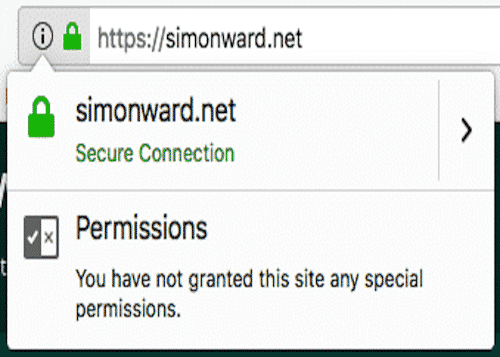
- HTTPS everywhere. All pages must be served over HTTPS. AI engines treat HTTP pages as low-trust. Free SSL via Let's Encrypt takes minutes to install.
- Mobile-first performance. Run your site through Google PageSpeed Insights. Aim for a mobile score above 80. Slow sites are deprioritised by AI retrieval systems.
- Clean, crawlable HTML. Most AI crawlers cannot parse JavaScript-rendered content. Critical content — your key answers, facts, and structured data — must exist in the raw HTML source.
- Clean URL structure. Slugs like
/what-is-generative-engine-optimization/help AI systems understand your topic instantly. Avoid parameter-heavy URLs for key pages. - Check robots.txt for AI bot access. Ensure GPTBot (OpenAI), ClaudeBot (Anthropic), PerplexityBot, and Google-Extended are not accidentally blocked. One disallow line can eliminate your visibility on an entire platform.
- XML sitemap submitted. Submit to both Google Search Console and Bing Webmaster Tools — ChatGPT sources from Bing's index, so being indexed there matters.
- Core Web Vitals passing. Google's CWV metrics (LCP, INP, CLS) remain relevant for AI Overviews, which pull heavily from Google's index.
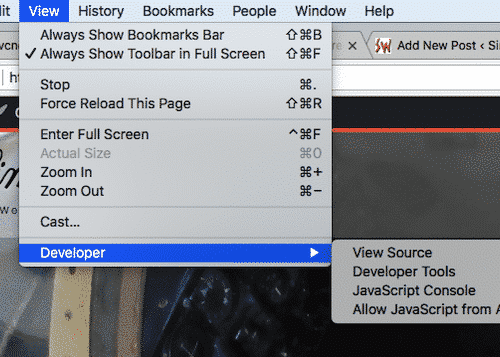
Quick test: Open your most important page, right-click, and select "View Page Source." Everything AI systems need to understand must be visible in that raw HTML. If key answers only appear after JavaScript runs, you need server-side rendering.
Step 3 — Restructure Your Content for AI Engines
AI systems pull passages, not pages — structure your content accordingly
This is the single highest-impact change most websites can make. AI retrieval systems scan for self-contained, answer-shaped passages. If your content isn't structured to surface those clearly, it gets skipped.
The Answer-First Structure
Research from Enrich Labs found that AI Overviews cite from the first 200 words of a page 55% of the time. Your opening must directly answer the primary query — not build slowly toward it. State what the content covers and the core conclusion before the reader scrolls.
Use Question-Based Headings
A heading that reads "What is Generative Engine Optimization?" is far more likely to be cited for that query than "GEO Overview." Rewrite your H2 and H3 headings as the actual questions your audience asks. Use AlsoAsked and AnswerThePublic to find the exact phrasing.
Formatting That AI Engines Favour
- Start every section with a direct definition. AI models extract concise, self-contained definitions first. Open each section with one clear defining sentence.
- Maintain fact density. Embed a statistic or verifiable fact every 150–200 words with a named source directly in the text.
- Use numbered lists for processes. Step-by-step numbered lists are a favourite structure for AI to reproduce in answers.
- Keep paragraphs to 3–4 sentences. Dense walls of text are harder for AI retrieval systems to cleanly parse and extract from.
- Add a TL;DR or Quick Answer box. A short direct summary at the top of long articles gives AI engines an immediately extractable, citation-ready passage.
- Write in natural, conversational language. Keyword-stuffed content performs worse in GEO. AI models are trained on natural language and prefer it.
- Include comparison tables. Among the most-cited content types by AI systems for both informational and commercial queries.
Direct answer in the first 40–60 words → a statistic with a named source → clear question-format headings → FAQ section with schema at the end. This structure alone can materially improve your citation rate within weeks.
Step 4 — Implement Schema Markup (The GEO Supercharger)
Schema is the clearest signal you can send an AI about what your content means
Schema markup is structured data embedded in your page's code that tells AI systems exactly what type of content a page contains. It is one of the highest-leverage technical implementations in GEO — and most small websites don't use it properly.
Priority Schema Types for GEO
- FAQPage schema — marks up Q&A sections so AI engines can extract individual questions and answers as standalone citations. The single most impactful schema type for GEO. Add it to every page with a Q&A section.
- HowTo schema — marks up step-by-step guides, making your process content highly extractable for "how to" queries across all AI platforms.
- Article schema — identifies editorial content with author, published date, and modified date. Date signals are critical — AI systems weight recent content heavily.
- Organization schema — establishes your brand identity: name, URL, logo, contact info, social profiles. Consistency across your site and the wider web is essential.
- Person schema — establishes author expertise. Content from named, credentialed authors is cited 340% more frequently than anonymous content (GEO-BENCH study).
- BreadcrumbList schema — helps AI systems understand your site's hierarchical structure and topical authority.
Stack multiple schema types on every key page. This article uses Article + FAQPage + HowTo + Organization simultaneously. Research from GenOptima confirms stacking schema types significantly increases AI citation probability.
WordPress users: install Rank Math SEO (free) — it handles most schema types automatically including FAQPage and HowTo. Validate all schema using Google's Rich Results Test before going live.
Step 5 — Build Authority Through Third-Party Mentions
AI engines trust what the wider web says about you — not just what you say about yourself
When multiple independent sources discuss your brand in relevant contexts, AI systems have clearer, stronger signals to interpret your credibility. This is citation authority — the GEO equivalent of backlink authority in SEO.
Get Featured in “Best Of” and Comparison Articles
Research from First Page Sage found that appearing in highly-ranked list articles makes the single biggest difference in earning an AI chatbot's recommendation. In many cases ChatGPT, Gemini, and Perplexity respond to commercial queries with a version that closely mirrors the top-ranked comparison article. Actively pursue placement in roundup articles and "best of" lists in your niche — a single placement can result in immediate AI citation uplift.
Earn Genuine Customer Reviews
- G2 and Capterra for software and SaaS products
- Trustpilot for services and e-commerce brands
- Google Business Profile for local service businesses
- Amazon for physical products
- Industry-specific directories and professional association listings
Pursue Editorial Press Coverage
Being mentioned in reputable news publications — even briefly — gives AI engines a strong authority signal. Register as an expert source on Connectively (formerly HARO), where journalists regularly seek expert commentary. A single quote in a relevant publication can lift your brand's AI citation probability significantly.
Wikipedia and Wikidata Presence
Wikipedia is one of the most heavily weighted sources across virtually all AI training datasets. If your brand or area of expertise is notable enough, pursue a Wikipedia page with proper sourcing. Even a Wikidata entry for your organisation can strengthen AI recognition of your brand entity.
Key principle: Earned mentions — those you do not directly control — carry the most weight. Customer reviews on G2, journalist coverage, Reddit recommendations, and organic forum mentions all provide the independent, third-party validation AI systems trust most.
Step 6 — Publish Original Research & Data
Become a primary source — not a secondary one
AI engines cite original research and unique statistics far more than general explainer content. When you publish original data that others reference, you transform from a secondary source into a primary one.
- Survey your customers or audience. A short 10-question survey sent to your email list generates unique data points nobody else has. Publish the results as a standalone research post with clear, citable statistics.
- Analyse public data in a new way. Aggregating publicly available data in a unique format for your niche counts as original research. Government datasets and tools like Statista are useful starting points.
- Document your own operational data. Anonymised internal metrics — conversion benchmarks, retention rates, performance figures — published as industry benchmarks are highly citeable and hard for competitors to replicate.
- Create annual industry reports. Even a modest annual report with 5–10 original data points builds citation authority year over year as it becomes a reference point in your niche.
- Publish case studies with real numbers. Semrush data shows 50% of ChatGPT response links point to business or service websites — detailed case studies with quantified outcomes are among the most-cited content types.
Step 7 — Expand Your Digital Footprint Off-Site
AI doesn’t just read your website — it reads everything the internet says about you
AI training data and real-time retrieval draw from a wide range of sources beyond your own website. Reddit, Quora, LinkedIn, and YouTube are all heavily represented. Building a genuine presence across these platforms multiplies your citation surface area.
Reddit and Quora
Reddit was one of the top cited sources across all major AI platforms as recently as October 2025. Genuine, helpful participation in relevant subreddits builds the community-driven authority AI systems weight highly. Write as an expert sharing useful knowledge — promotional or thin content is downvoted into invisibility.
LinkedIn and YouTube
LinkedIn is increasingly cited by AI systems for professional and B2B queries. YouTube was among the top cited sources in October 2025 — include full transcripts in video descriptions so AI crawlers can read content they cannot process from video itself.
Consistent Brand Information Everywhere
AI systems aggregate information about your brand from dozens of sources. Inconsistent descriptions cause confusion and can lead AI to omit or misrepresent you. Standardise your brand information across:
- Your website's About page and homepage meta description
- Google Business Profile (especially name, description, categories)
- LinkedIn company page and personal profile
- Crunchbase and official company registries
- Industry directories and association listings
- Social media profile bios across all platforms
- Press releases and any media coverage
Step 8 — Optimise for Each AI Platform Individually
Each AI engine has distinct citation preferences — tailor your approach accordingly
While most GEO principles apply universally, each major AI platform selects and cites content differently. Understanding these differences lets you prioritise the right optimisations for the platforms that matter most.
Priority order: Start with ChatGPT (78% AI search market share) and Google AI Overviews (1.5 billion monthly users across 100+ countries). Then Perplexity (fast-growing, highest-converting audience) and Claude. Copilot and Gemini benefit largely from your existing SEO and Bing Webmaster setup.
Step 9 — Monitor, Measure & Iterate
GEO is a continuous process, not a one-time project
AI platforms update their models and change citation behaviours regularly. A consistent monitoring cadence is essential to know what's working, what's slipping, and where to focus next.
- Citation frequency: How often your brand appears in AI responses to your target queries. Track manually once per month across all five major platforms.
- Citation sentiment: When AI mentions your brand, is it positive, neutral, or qualified with caveats? Negative citations often point to reputation issues you need to address at source.
- AI referral traffic in GA4: Create a custom channel group for sessions from
chatgpt.com,claude.ai,perplexity.ai, andgemini.google.com. Track sessions, conversions, and revenue from this channel separately. - Share of voice vs competitors: Which competitors appear in AI responses alongside — or instead of — you? Closing that gap should drive your content priorities.
- Content freshness: Un-updated pages lose AI citation rates at ~3× the normal rate (GenOptima, 2026). Add a "What Changed in [Current Year]" section to evergreen articles and update statistics quarterly.
- Run manual AI searches for your top five queries across ChatGPT, Claude, and Perplexity — screenshot as your baseline
- Add FAQPage schema to your three highest-traffic pages using Rank Math or a schema plugin
- Rewrite the first paragraph of your homepage to directly answer "What does [your brand] do and who is it for?"
- Check robots.txt — ensure GPTBot, ClaudeBot, and PerplexityBot are not blocked
- Add a 5-question FAQ section to your most visited blog post with H3 question-format headings
- Ask five happy customers for a Trustpilot or Google review this week
- Submit your sitemap to Bing Webmaster Tools — ChatGPT sources from Bing's index
- Create a GA4 custom channel group to start measuring AI referral traffic separately from organic
GEO vs SEO: Full Side-by-Side Comparison
The winning approach in 2026 combines both — with GEO now receiving priority attention as the higher-growth opportunity. Here is how the two strategies compare across every key dimension:
| Factor | Traditional SEO | GEO / AEO |
|---|---|---|
| Goal | Rank in Google's list of links | Be cited inside an AI-generated answer |
| Primary ranking signal | Backlinks, keyword relevance, CTR | Citation authority, content structure, factual density |
| Content format | Keyword-rich long-form pages | Direct answers, Q&A, structured data, original facts |
| User experience | A link in a list — may or may not click | Your brand cited in the answer — brand awareness delivered |
| Conversion quality | ~1.76% Google organic | 15.9% ChatGPT · 10.5% Perplexity · 5% Claude |
| Time to results | Months to years | Weeks (technical) · 3–6 months (authority) |
| Schema markup | Helpful for rich snippets | Critical — FAQPage, HowTo, Article all directly cited |
| Author expertise signals | Useful (E-E-A-T) | Highly weighted — named authors cited 340% more |
| Off-site signals | Backlinks from other domains | Reviews, Reddit/Quora, press coverage, Wikipedia |
| Growth trend (2025–26) | Declining (-1% YoY Google traffic) | Exploding (+416% avg YoY AI traffic growth) |
| Should you do it? | Yes — essential for traffic volume | Yes — essential for quality & future growth |
The bottom line: Do not abandon SEO, but do not rely on it alone. The brands winning the next five years are building strong foundations in both simultaneously. Most GEO best practices — quality content, clear structure, strong authority — actively reinforce your SEO at the same time.
Tools & Resources for GEO & AEO
🔍 AI Visibility Monitoring
📝 Content, Schema & Research
🔬 Webmaster & Analytics
Frequently Asked Questions About GEO & AEO
These are the most commonly asked questions about Generative Engine Optimization and ranking in AI chatbots. This section is structured with FAQPage schema to help this article rank in AI responses to exactly these questions.
What is Generative Engine Optimization (GEO)?
GEO is the practice of optimising your content so that AI-powered platforms — such as ChatGPT, Claude, Perplexity, and Google AI Overviews — cite, reference, or recommend your brand in their generated responses. Unlike traditional SEO, which earns you a position in a list of links, GEO makes your content the source of the answer AI gives. The term was formalised in 2024 academic research by Princeton University, Georgia Tech, and IIT Delhi, and entered mainstream marketing vocabulary in 2025.
What is the difference between GEO and AEO?
Answer Engine Optimization (AEO) was originally coined for voice search and Google's featured snippets. Generative Engine Optimization (GEO) is a broader, newer term covering all AI-generated responses. In 2026 the two terms are effectively interchangeable — voice queries now route through the same generative AI systems that power text-based chat, so the practical distinction has collapsed.
Is AI search traffic really more valuable than Google organic traffic?
In terms of conversion quality, yes — significantly. Seer Interactive data shows ChatGPT visitors convert at 15.9% and Perplexity visitors at 10.5%, compared to Google organic's 1.76%. Semrush found that LLM visitors overall convert 4.4× better than organic search visitors. AI-referred visitors also spend more time on site and view more pages per session. In raw volume, Google is still far larger — but the per-visitor quality advantage strongly favours AI-referred traffic.
Will AI chatbots completely replace Google search?
Not immediately, and possibly never entirely — but the shift is real and accelerating. Google still processes an estimated 16.4 billion searches per day. However AI chatbot traffic grew 150% year-over-year in 2025, the ratio of Google to AI search users shrank from 10:1 to 4.4:1 in twelve months, and Gartner predicts a 25% drop in traditional search volume by 2026. The smart approach is to optimise for both channels simultaneously.
How do I check whether my brand appears in AI chatbot answers?
The simplest method is manual testing: open ChatGPT, Claude, Perplexity, and Gemini and search for your niche and brand. Ask "What are the best [niche] services?" and "Who are the leading experts in [field]?" Screenshot results and repeat monthly. For automated monitoring, tools like Semrush Enterprise AIO, Profound, and Ahrefs Brand Radar track citation frequency across multiple platforms continuously.
Does schema markup actually help with AI search visibility?
Yes — meaningfully. FAQPage, HowTo, Article, Organization, and Person schemas all help AI engines rapidly parse your content without ambiguity. FAQPage schema is especially powerful because it marks up individual question-and-answer pairs as standalone, citable units. Stacking multiple schema types on the same page is a GEO best practice for 2026. Always validate schema with Google's Rich Results Test before publishing.
How long does it take to see results from GEO?
Technical improvements — schema markup, content restructuring, answer-first formatting — can start showing results within weeks, as AI crawlers index frequently updated content fast. Authority-building through third-party mentions, editorial coverage, and reviews is a longer-term investment, typically taking three to six months to meaningfully shift citation frequency. Monitoring your baseline from day one is essential so you can measure every change accurately.
What content formats work best for AI citations?
AI engines favour direct, factual, self-contained answers. Best formats include: FAQ sections with FAQPage schema, step-by-step how-to guides with HowTo schema, original statistics with named sources, definition-led paragraphs that open with one clear sentence, comparison tables, and case studies with quantified outcomes. The first 200 words of any page are especially critical — AI Overviews cite from opening content 55% of the time.
Should I stop investing in SEO and focus only on GEO?
No. GEO and SEO are complementary, not competing. Traditional SEO still drives the largest volume of website traffic. Google's AI Overviews pull primarily from pages that already rank well — meaning strong SEO directly supports your Google AI citation rate. Add GEO as an additional layer on top of your existing SEO strategy. Most GEO best practices — quality content, clear structure, strong authority — reinforce your SEO at the same time.
Do I need to allow AI bots to crawl my website?
If you want to be cited by AI engines that use real-time retrieval — Perplexity, Google AI Overviews, and ChatGPT's browsing mode — then yes. Check your robots.txt file and ensure GPTBot (OpenAI), ClaudeBot (Anthropic), PerplexityBot, and Google-Extended are not blocked. Some publishers block these bots to prevent training data use, but doing so also eliminates real-time citation potential from those platforms entirely.
The Opportunity Is Right Now — Not Next Year
The transition from search engine dominance to AI-assisted discovery is not a future event — it is happening right now, and it is accelerating every month. AI-referred sessions grew 527% in the first five months of 2025 alone. The ratio of Google users to AI search users halved in twelve months. Visitors arriving from AI platforms convert at nearly nine times the rate of Google organic visitors.
And yet most small and medium businesses have not started on GEO. This is one of the clearest, most accessible first-mover opportunities in digital marketing right now. Start with Step 1 today. Run the manual searches, find out where you stand, and work through the checklist one step at a time. The brands that build AI visibility now are building an advantage that will compound for years.
If you found this guide useful, get in touch — I offer SEO and on-site optimisation services at simonward.net, including a dedicated On-site SEO service that covers the technical foundations described throughout this guide.