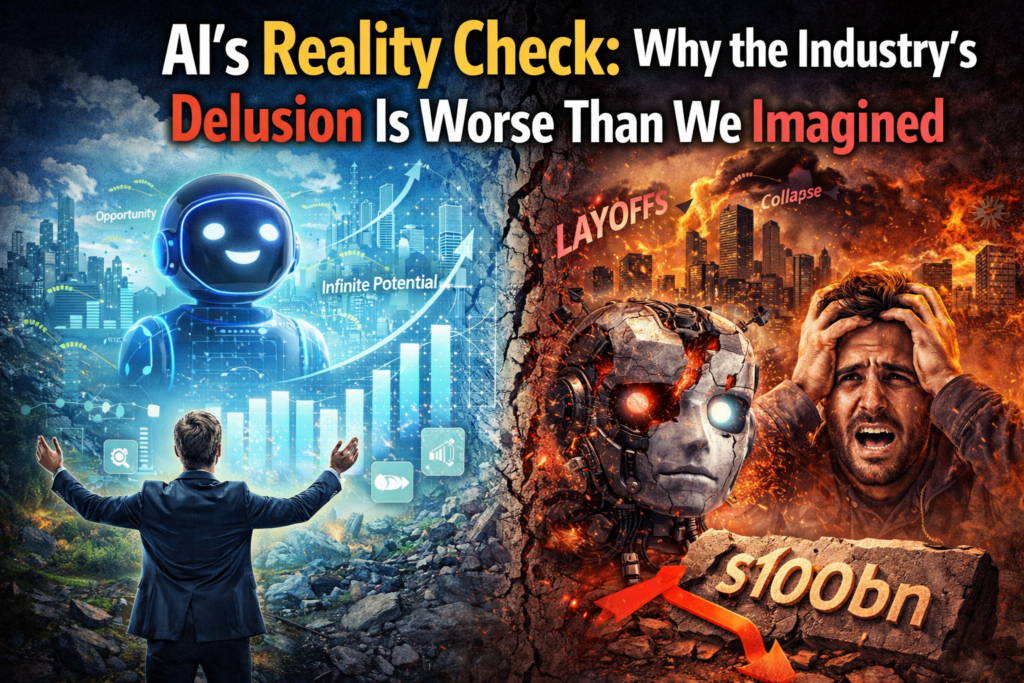
The tech industry's having a proper reality check, and I'm here for it. After years of breathless hype about AI revolution and digital transformation, we're finally seeing the cracks in the facade. From AI chatbots hitting their limits to self-driving cars literally stopping dead in traffic, this week's tech news reads like a sobering wake-up call.
The Great Social Media Retreat Is Finally Here
I've been banging on about this for years, but it's finally happening – people are stepping back from social media. Ofcom's latest findings show that UK adults are posting less on social platforms, and honestly, it's about bloody time. We've reached peak social media fatigue, and the numbers prove what I've been seeing anecdotally for months.
Think about your own social media habits. When was the last time you posted something genuinely meaningful? Not a reshare, not a quick story, but actual original content? If you're like most people I know, it's been a while. We've all become passive consumers rather than active participants, and that's fundamentally changing the social media landscape.
The reasons are obvious when you think about it. Platform algorithms have become so aggressive that organic reach is practically non-existent unless you're playing their engagement games. Add in the toxicity, the endless political arguments, and the general sense that everything's been said before, and it's no wonder people are checking out. I've personally scaled back my social media presence to focus on my blog and newsletter – places where I can actually connect with readers without fighting an algorithm.
What's particularly interesting is that this isn't just older users abandoning ship. Even younger demographics are showing signs of social media burnout. They're migrating to private group chats, Discord servers, and other more intimate digital spaces. The era of broadcasting your life to hundreds of acquaintances might finally be ending, replaced by something more authentic and manageable.
Oracle’s Job Cuts Signal Deeper Tech Industry Troubles
Oracle's making "significant" job cuts, and while the tech press is treating this as just another round of layoffs, I see something more troubling. This isn't a startup burning through venture capital or a social media company adjusting after over-hiring. This is Oracle – one of the most stable, profitable enterprise software companies in existence.
When Oracle starts cutting deep, it tells us something about the state of enterprise IT spending. Companies are tightening their belts, re-evaluating their software subscriptions, and pushing back on the endless upgrade cycles that have kept enterprise software vendors fat and happy for decades. The cloud migration boom that Oracle bet heavily on is slowing as businesses realise that lifting and shifting everything to the cloud isn't always the cost-saving miracle it was sold as.
I've worked with enough businesses to know that Oracle licenses are often the first thing finance departments scrutinise when budgets get tight. Those eye-watering annual fees suddenly look less justifiable when you realise you're only using 20% of the features. The job cuts suggest Oracle's feeling this pressure across their customer base.
What worries me more is the ripple effect. Oracle employs thousands of highly skilled developers, database administrators, and enterprise architects. When these people flood the job market, it depresses wages and makes it even harder for younger tech workers to find their footing. We're creating a two-tier system where either you're in AI/ML or you're struggling to find decent opportunities.
OpenAI’s Media Power Play Shows AI’s Marketing Problem
OpenAI acquiring a tech talk show might seem like a minor story, but it reveals something crucial about the AI industry's current state. When you need to buy your own positive news coverage, you've got a perception problem. And mate, OpenAI definitely has a perception problem.
The move reeks of desperation. Here's a company that's supposedly building AGI (Artificial General Intelligence) for the benefit of humanity, and they're out here acquiring media properties like a struggling consumer brand. It's like watching Tesla buy Top Gear – you know something's not quite right with the narrative they're trying to sell.
What this tells me is that OpenAI is feeling the heat from multiple directions. Public sentiment around AI is souring as people realise that ChatGPT isn't going to solve all their problems (and might create new ones). Regulators are circling, competitors are catching up, and the astronomical costs of training ever-larger models are becoming harder to justify to investors.
By controlling their own media channel, OpenAI can craft narratives, showcase cherry-picked successes, and downplay failures or concerns. It's a classic move from the corporate playbook, but it feels particularly cynical coming from a company that started with such lofty ideals about democratising AI. The fact that they feel they need this kind of media control suggests they know the honeymoon period is over.
Claude’s Usage Limits Expose AI’s Scalability Crisis
Here's where things get properly interesting. Claude users are hitting usage limits "way faster than expected," and this isn't just a minor technical hiccup – it's a fundamental challenge to the entire AI-as-a-service model. I've been testing Claude extensively for coding projects, and the usage limits are genuinely restrictive for any serious development work.
The problem is simple maths. These large language models are incredibly expensive to run. Every query requires significant computational resources, and when users start having actual conversations or iterating on complex problems, the costs spiral out of control. Anthropic (Claude's creator) is essentially subsidising usage to gain market share, but that's not sustainable long-term.
What we're seeing is the collision between user expectations and economic reality. People have gotten used to free or cheap digital services funded by advertising or venture capital. But AI doesn't work that way. There's no advertising model that makes sense, and the venture capital is starting to demand actual revenue.
I predict we'll see significant price increases across all AI platforms in the next year. The current pricing is a loss leader, and once users are hooked, the real costs will emerge. For developers and businesses building on these platforms, it's a serious concern. You could build your entire workflow around Claude or ChatGPT only to find the economics completely change underneath you.
Baidu’s Self-Driving Cars: A Metaphor for Tech’s Ambitions
If you want a perfect metaphor for the current state of tech, look no further than Baidu's Apollo Go self-driving cars literally stopping in the middle of traffic in China. Here's technology that's been hyped for over a decade, billions invested, countless promises made, and the reality? Cars freezing up and causing traffic jams.
I'm not anti-autonomous vehicles – the technology has genuine potential. But the gap between demo and deployment remains massive. Edge cases are everywhere in real-world driving, and no amount of machine learning can prepare for the infinite variety of human stupidity on the roads.
The Baidu incidents highlight a broader pattern I'm seeing across tech: premature deployment driven by competitive pressure rather than technical readiness. Companies are so desperate to be first, to claim market leadership, that they're pushing half-baked solutions into production. When your self-driving car can't handle basic traffic scenarios, maybe it shouldn't be on public roads.
This rush to market is particularly dangerous with safety-critical systems. A chatbot giving wrong answers is annoying; a two-tonne vehicle freezing in traffic is potentially lethal. Yet the pressure to show progress, to justify the billions in investment, pushes companies to take risks they shouldn't.
My Take: The Tech Reckoning We Desperately Needed
Looking at these stories together, I see a pattern that's both concerning and oddly reassuring. The tech industry is finally being forced to confront reality after years of living in a hype bubble. The free money era is over, the technical limitations are becoming apparent, and users are getting wise to the downsides of our digital dependencies.
This reckoning was inevitable and necessary. We've spent the last decade pretending that every problem could be solved with an app, that AI would revolutionise everything, and that exponential growth could continue forever. The cracks we're seeing – from social media decline to AI limitations to job cuts at stable companies – are signs of a maturing industry being forced to deliver actual value rather than just promises.
For those of us who work in tech, this means adjusting our expectations and skills. The days of joining a startup and riding it to unicorn status are largely over. The gold rush mentality needs to be replaced with sustainable business thinking. We need to build products that solve real problems, not just chase the latest buzzword.
I'm particularly interested in what fills the void left by social media's decline. My bet is on smaller, more focused communities – the return of forums, newsletters, and blogs. Places where genuine expertise and authentic voices can cut through the noise. It's why I've doubled down on my own blog and direct reader relationships.
As for AI, we need to stop treating it as magic and start seeing it as a tool with specific strengths and limitations. The current models are impressive but expensive pattern-matching systems, not the dawn of artificial consciousness. Once we accept that, we can find actually useful applications rather than trying to force AI into every possible use case.
The tech industry needed this reality check. After years of "move fast and break things," we're finally being forced to clean up the mess. It's painful for those caught in layoffs or building on unstable platforms, but ultimately necessary for creating a more sustainable, responsible tech ecosystem. The party's over, and it's time to clean up and build something real.
Frequently Asked Questions
Why are people posting less on social media?
Algorithm fatigue, privacy concerns, toxicity, and the realisation that broadcasting to hundreds of acquaintances isn't fulfilling are driving users away from active posting towards passive consumption or smaller, private communities.
What do Oracle’s job cuts mean for the tech industry?
They signal that even stable enterprise companies are feeling pressure as businesses re-evaluate software spending. This creates a tougher job market and suggests the enterprise IT boom is slowing significantly.
Are AI usage limits temporary or permanent?
The limits reflect the fundamental economics of running large language models. While infrastructure may improve, the costs suggest current low prices are unsustainable, making stricter limits or higher prices likely permanent features.