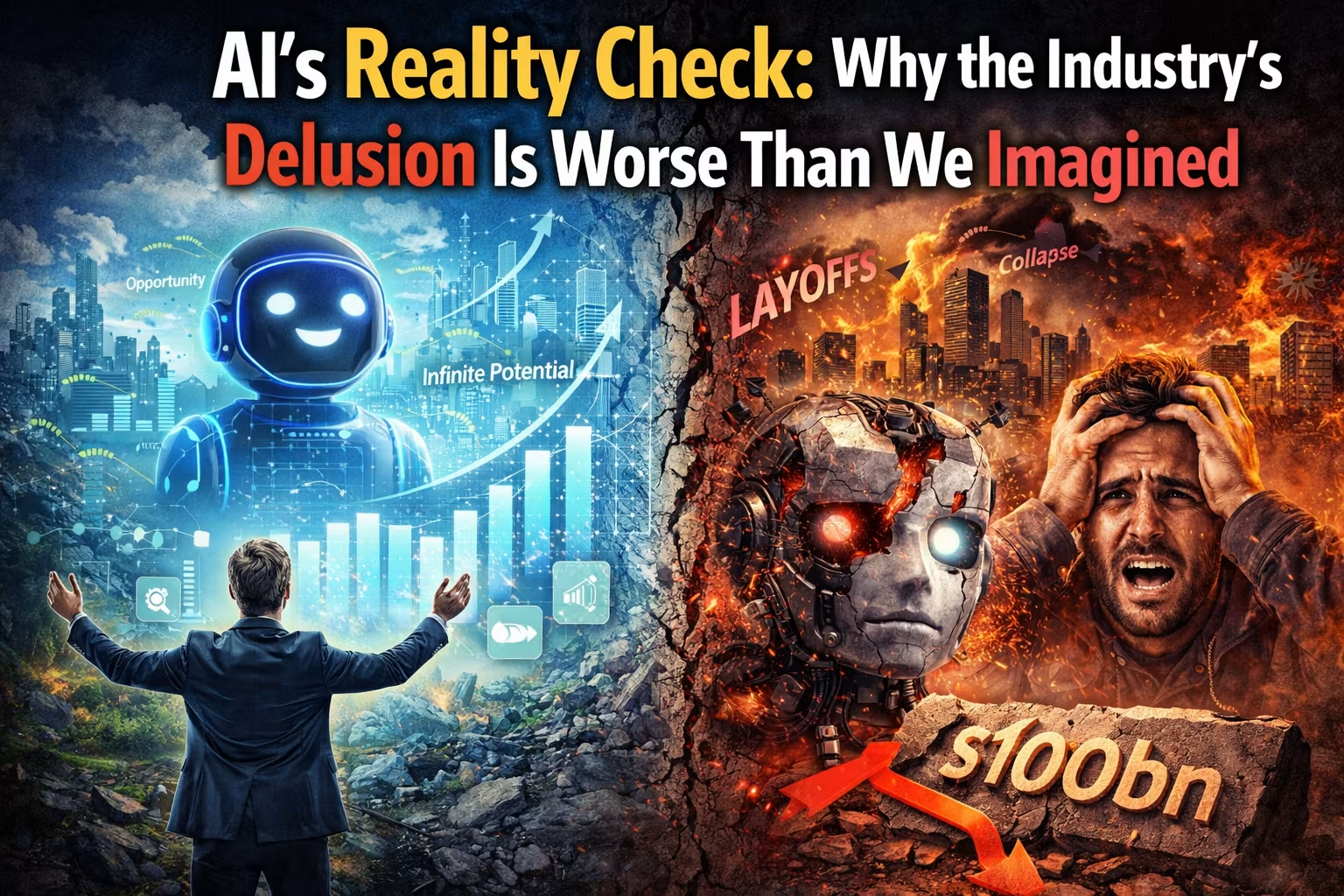
Right, let's cut through the corporate doublespeak. The tech industry has discovered its newest favourite villain to blame for mass redundancies: artificial intelligence. But here's what's actually happening behind the carefully crafted PR statements and shareholder-friendly narratives.
The Great AI Scapegoat of 2026
I've been watching this pattern emerge over the past few months, and it's becoming laughably predictable. Tech CEO announces layoffs. Tech CEO blames AI. Tech CEO's share price goes up. Rinse and repeat. Oracle's latest "significant" job cuts are just the newest verse in this tired song.
What strikes me most about this trend is the sheer intellectual dishonesty of it all. These same executives who spent the last five years telling us AI would create more jobs than it destroys are now using it as convenient cover for what are essentially cost-cutting exercises designed to boost quarterly earnings.
Here's the reality: most of these companies aren't actually replacing workers with AI systems. They're simply cutting headcount to improve their balance sheets, and AI provides the perfect narrative. It sounds forward-thinking, inevitable, and most importantly, it shifts blame away from management decisions.
I've worked with enough enterprise clients to know that true AI implementation takes years, not quarters. The idea that companies are suddenly discovering AI can replace thousands of workers overnight is absolute bollocks. What they're really saying is: "We overhired during the pandemic boom, and now we need to correct course, but we'd rather not admit we made mistakes."
Innovation Continues Despite the Doom and Gloom
Whilst Silicon Valley executives perfect their "AI ate my workforce" speeches, actual innovation continues happening in places you might not expect. Take Coventry, for instance. The battery research centre there is experiencing genuine optimism and growth – a refreshing change from the redundancy notices flooding out of California.
This highlights something I've been saying for years: the real technological progress often happens away from the spotlight. Whilst everyone's obsessing over the latest AI chatbot or social media platform, researchers in places like Coventry are quietly solving the energy storage challenges that will actually shape our future.
Battery technology might not generate clickbait headlines like "AI WILL STEAL YOUR JOB," but it's arguably more important for our long-term prosperity. The work being done in the UK on next-generation battery systems could revolutionise everything from electric vehicles to grid storage. That's the kind of innovation that creates sustainable, high-skilled jobs – not the boom-and-bust cycle we're seeing in software.
Apple's latest Siri developments – handling multiple commands simultaneously – represent the kind of incremental improvement that actually matters to users. It's not revolutionary, but it's useful. This is what real AI progress looks like: steady, practical improvements that enhance existing tools rather than promising to replace entire workforces.
The Asian Tech Gold Rush
Here's where things get properly interesting. Whilst Western tech companies are busy firing people and blaming robots, Chinese tech firms are racing to establish themselves in Hong Kong. The contrast couldn't be more stark.
This eastward expansion tells us something important about the global tech landscape in 2026. The narrative of decline and job losses is largely a Western phenomenon. Asian markets are experiencing growth, investment, and genuine optimism about the future. Chinese companies aren't using AI as an excuse to cut costs; they're using it as a reason to expand.
I've been tracking this shift for the past couple of years, and it's accelerating. Hong Kong is positioning itself as the bridge between Chinese innovation and global markets, and tech companies are responding. The city offers something Silicon Valley increasingly doesn't: a government that actively supports tech growth rather than threatening to break up successful companies.
What's particularly fascinating is how these Chinese firms are approaching AI differently. Rather than viewing it as a replacement for human workers, they're treating it as a force multiplier. They're hiring more engineers, not fewer. They're expanding operations, not contracting them. It's almost as if the "AI will destroy all jobs" narrative is more about quarterly earnings reports than technological reality.
The UK’s Position in This New Landscape
As a UK-based tech professional, I'm watching these global shifts with mixed feelings. On one hand, we're seeing brilliant work happening in places like Coventry. British researchers and engineers are making genuine contributions to fields like battery technology, renewable energy systems, and yes, even AI.
But we're also seeing the effects of the global tech downturn. Oracle's job cuts will undoubtedly affect UK workers. The ripple effects of Silicon Valley's boom-bust cycles always reach our shores eventually. The question is whether we'll continue following the American model or chart our own course.
I believe the UK has an opportunity here. We don't need to buy into the "AI apocalypse" narrative being peddled by tech executives looking to justify poor planning. We can focus on the kind of steady, sustainable innovation that creates real value and lasting employment. The battery research in Coventry is a perfect example of this approach.
Our tech sector doesn't need to be about unicorns and moonshots. It can be about solving real problems with practical solutions. That might not generate the same headlines as "AI REPLACES 10,000 WORKERS," but it creates the kind of economic foundation that actually matters.
The Real Story Behind the Headlines
Let me be blunt about what's really happening here. The tech industry is going through a necessary correction after years of unsustainable growth. Companies hired aggressively during the pandemic, betting that the digital transformation would continue at breakneck speed. It didn't.
Now they need to reduce costs, but admitting "we made bad bets and overhired" doesn't play well with investors. So instead, we get this AI narrative. It's not lying exactly, but it's certainly not the truth. It's corporate storytelling at its finest – or worst, depending on your perspective.
The irony is that AI genuinely will transform the workplace over the coming decades. But it won't happen through sudden mass layoffs. It'll happen through gradual automation of specific tasks, the creation of new hybrid roles, and yes, some job displacement. But also job creation in areas we haven't even imagined yet.
Real AI implementation in the enterprise is messy, complicated, and slow. I've worked on enough projects to know that replacing human workers with AI systems is rarely straightforward. Most of the time, you end up needing more humans to manage, maintain, and interpret the AI systems. The idea that companies can flip a switch and replace thousands of workers with algorithms is fantasy.
My Take: Time for Honest Conversations
Here's what I think needs to happen. First, we need to stop accepting the AI excuse at face value. When a company announces layoffs and blames artificial intelligence, we should be asking hard questions. Which specific AI systems are replacing these workers? What's the implementation timeline? How much is the company actually investing in AI versus how much they're saving in salary costs?
Second, we need to recognise that the tech industry's boom-bust cycle isn't sustainable or healthy. The constant hiring and firing based on quarterly projections is destroying lives and careers. We need a more stable, sustainable approach to growth – something closer to what we're seeing in Coventry than Silicon Valley.
Third, workers need to focus on skills that complement AI rather than compete with it. That means creativity, complex problem-solving, emotional intelligence, and the ability to work across disciplines. The battery researchers in Coventry aren't worried about being replaced by AI because they're doing work that requires human insight, creativity, and judgment.
Finally, we need to pay attention to what's happening in Asia. The Chinese tech companies setting up in Hong Kong aren't buying into Western doom-and-gloom narratives. They're investing, expanding, and hiring. Perhaps there's something we can learn from their approach.
The truth is, technology should be making our lives better, not worse. It should be creating opportunities, not destroying them. When tech executives use AI as an excuse for mass layoffs, they're betraying the fundamental promise of technological progress. We deserve better than corporate spin and convenient scapegoats.
The next time you read about AI-driven job cuts, remember: the AI isn't making these decisions. People are. And they should be held accountable for them.
Frequently Asked Questions
Are tech companies really replacing workers with AI in 2026?
Whilst some job displacement is occurring, most current layoffs aren't directly caused by AI implementation. Companies are using AI as a convenient narrative to explain cost-cutting measures and corrections from pandemic-era overhiring.
Which tech sectors are still growing despite the layoffs?
Battery technology, renewable energy systems, and practical AI applications are seeing continued investment and growth. Additionally, Asian tech markets, particularly in Hong Kong, are experiencing significant expansion as Chinese companies establish international operations.
How can tech workers protect themselves from AI-related job losses?
Focus on developing skills that complement AI rather than compete with it: creative problem-solving, emotional intelligence, cross-disciplinary expertise, and the ability to manage and interpret AI systems. The jobs most at risk are those involving routine, predictable tasks.